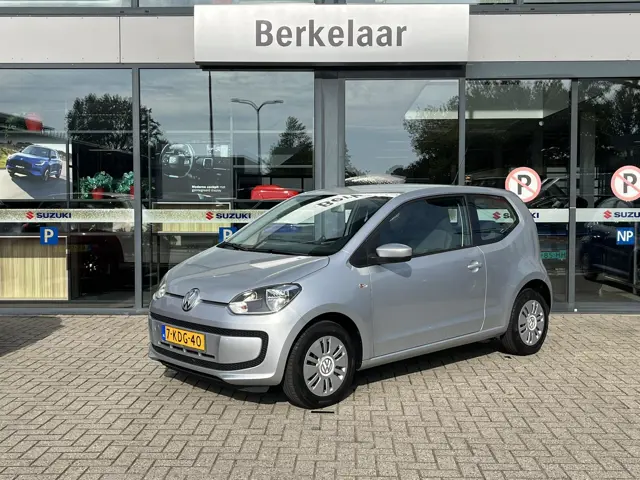
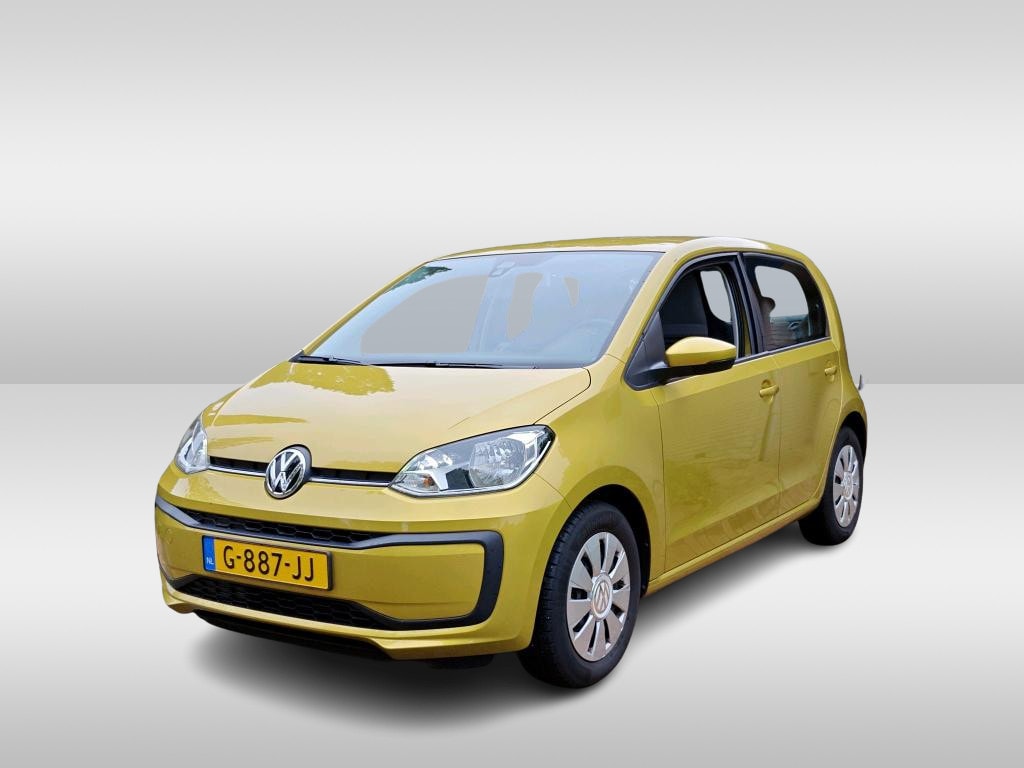
Volkswagen up! 1.0 move up! 2012
- Mileage
- 93,409 km
- Fuel
- Petrol
- Location
- Berkel en Rodenrijs
- Year
- 2012
Online since 20 October 2026 · Dealer websites (Autodata)
View car detailsAuto Griffioen
What is your Volkswagen up! worth in 2026? See the indication by year, known weak spots and tips for the best price.
A 2023 Volkswagen up! with around 46,000 km fetches roughly €8,600 in a private sale, or about €7,300 as a trade-in. A 2018 car with 111,000 km is worth about €4,750 privately. These are indications for a car in good condition.
Indicationby model year, with average mileage and in good condition (prices as of October 2026)
| Year | Avg. mileage | Trade-in | Auction / dealer bid | Private sale |
|---|---|---|---|---|
| 202346,000 km | 46,000 km | €7,300 | €7,950 | €8,600 |
| 202259,000 km | 59,000 km | €6,400 | €6,950 | €7,550 |
| 202172,000 km | 72,000 km | €5,550 | €6,050 | €6,650 |
| 202085,000 km | 85,000 km | €4,850 | €5,350 | €5,950 |
| 201998,000 km | 98,000 km | €4,200 | €4,700 | €5,300 |
| 2018111,000 km | 111,000 km | €3,650 | €4,150 | €4,750 |
| 2017124,000 km | 124,000 km | €3,150 | €3,650 | €4,250 |
| 2016137,000 km | 137,000 km | €2,700 | €3,200 | €3,800 |
| 2015150,000 km | 150,000 km | €2,300 | €2,800 | €3,400 |
| 2014163,000 km | 163,000 km | €1,850 | €2,350 | €2,950 |
| 2013176,000 km | 176,000 km | €1,450 | €1,950 | €2,550 |
| 2012189,000 km | 189,000 km | €1,050 | €1,550 | €2,150 |
| 2011202,000 km | 202,000 km | €750 | €1,250 | €1,850 |
Calculated with the Sell Your Car value model: estimated new price, yearly depreciation for this segment and fuel, and how well this model holds its value. Trim, options, damage and servicing make the difference.
Value your own car by licence plate
By build year, from the 79 Volkswagen up! cars for sale at dealers and importers on 27 October 2026. Private sale, dealer offer and trade-in are derived from the asking price with the usual dealer margins; your car can differ by trim, mileage and condition.
| Year | Dealer asking price | Private sale | Dealer offer | Trade-in | Mileage |
|---|---|---|---|---|---|
| 2023 (22) | €14,250 | €12,800 | €11,850 | €10,900 | 48,000 km |
| 2022 (10) | €18,200 | €16,350 | €15,150 | €13,900 | 45,500 km |
| 2021 (25) | €10,400 | €9,350 | €8,650 | €7,950 | 73,000 km |
| 2020 (4) | €9,800 | €8,800 | €8,150 | €7,500 | 86,000 km |
| 2019 (8) | €10,250 | €9,200 | €8,500 | €7,850 | 80,500 km |
| 2018 (4) | €8,350 | €7,500 | €6,950 | €6,400 | 120,000 km |
A Volkswagen up! loses 2.3% a year on average. Measured on 73 cars for sale on 27 October 2026 (built 2018–2023).
| Year | Cars | Asking price | New price | Value kept | Drop per year | Mileage |
|---|---|---|---|---|---|---|
| 2023 | 22 | €14,250 | €19,300 | 72% | – | 48,000 km |
| 2022 | 10 | €18,200 | €25,600 | 72% | +0.3% | 45,500 km |
| 2021 | 25 | €10,400 | €16,400 | 63% | −13% | 73,000 km |
| 2020* | 4 | €9,800 | €15,150 | 67% | +6.3% | 86,000 km |
| 2019 | 8 | €10,250 | €14,100 | 69% | +3.5% | 80,500 km |
| 2018* | 4 | €8,350 | €13,600 | 61% | −11% | 120,000 km |
Median per year. New price: what the car cost new in the Netherlands, the RDW catalogue price (incl. VAT, BPM and factory options, without delivery costs). For cars imported used: the Dutch catalogue price of that version. Value kept: asking price divided by the car’s own new price. Drop per year: value kept against the next newer year; a plus means that year asks relatively more. Older cars have more miles, which is part of the drop. * Fewer than 5 cars: indicative only. Asking prices, not sale prices.
The up! is the city car Volkswagen stopped building in 2023, and that is exactly why it stays in demand: no new ones are coming. Buyers are new drivers, parents looking for a first car for their child and city dwellers who want something frugal that fits anywhere. The 1.0 with 60 or 75 hp is the volume seller; the 1.0 TSI and the GTI are the pick of the bunch. Its twins, the Škoda Citigo and Seat Mii, are technically almost identical; buyers compare them directly, though they often pay a little more for the VW badge.
The e-up! is a different story. The version from 2020 with 32.3 kWh usable capacity was especially popular. For that car, battery health (SoH) and charging options set the price. Buyers may also wait for the announced subsidy for used EVs, which is not open yet (read more). With the petrol up!, it is all about servicing, five doors and air conditioning. Start with a free valuation and compare trade-in, auction and private sale.
| Generation | Years | What to know |
|---|---|---|
| up! (eerste versie)2011–2016 | 2011–2016 | 1.0 three-cylinder with 60 or 75 hp, three or five doors, optional ASG automated gearbox. |
| up! (facelift)2016–2023 | 2016–2023 | New 90 hp 1.0 TSI, better smartphone integration and, from 2018, the sporty up! GTI. |
| e-up!2013–2023 | 2013–2023 | Electric; first with a small battery, from 2020 with 32.3 kWh usable and a much longer range. |
These are the versions buyers search for most. Name the exact version in your ad.
Online since 20 October 2026 · Dealer websites (Autodata)
Online since 7 October 2026 · Suzuki Occasions
VAT deductible€7,810 excl. VAT
Online since 20 October 2026 · Volkswagen Occasions
1975–present · Petrol, Diesel
1974–present · Petrol, Diesel, Plug-in hybrid, Electric
2017–present · Petrol, Diesel
2007–present · Petrol, Diesel, Plug-in hybrid
2020–present · Electric
Yes. With no new up! coming and small, affordable city cars becoming scarce, demand for tidy examples holds up well. Parts are widely available thanks to the shared technology with the Citigo and Mii. A five-door with air conditioning and full history gets the most responses; price it using a valuation and the asking prices of comparable cars.
Mostly the battery and the model year. An e-up! from 2020 with 32.3 kWh usable is far more sought after than an older version with a small battery. An SoH report reassures buyers. In 2026 electric cars pay 70% of the normal road tax (a 30% discount), which underlines the low running costs. Read how to check the battery before you advertise.
Yes, a little. The ASG is an automated manual that shifts slowly and with a nod; anyone expecting a proper automatic is often disappointed after the test drive. Some buyers do choose it deliberately, older drivers for example. Explain how it drives, and consider a dealer bid via auction if private buyers lose interest.