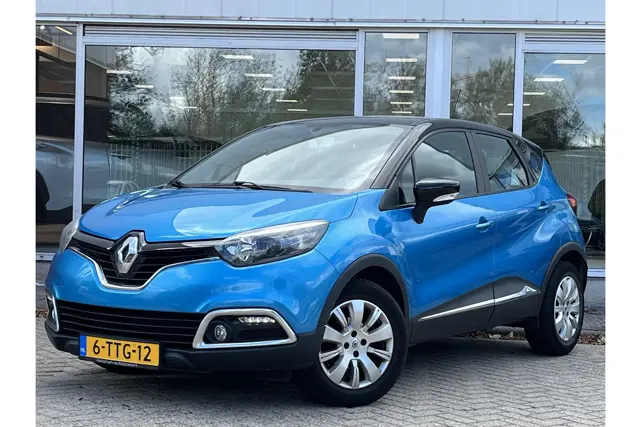
Renault Captur 0.9 TCe Dynamique, navigatie, achteruitcamera 2014
- Mileage
- 126,304 km
- Fuel
- Petrol
- Location
- Vlaardingen
- Year
- 2014
Online since 2 September 2026 · Dealer websites (Autodata)
View car detailsAutobedrijf van Toorn
What is your Renault Captur worth in 2026? See the indication by year, known weak spots and tips for the best price.
A 2025 Renault Captur with around 20,000 km fetches roughly €23,450 in a private sale, or about €19,950 as a trade-in. A 2020 car with 85,000 km is worth about €12,500 privately. These are indications for a car in good condition.
Indicationby model year, with average mileage and in good condition (prices as of October 2026)
| Year | Avg. mileage | Trade-in | Auction / dealer bid | Private sale |
|---|---|---|---|---|
| 202520,000 km | 20,000 km | €19,950 | €21,700 | €23,450 |
| 202433,000 km | 33,000 km | €17,500 | €19,050 | €20,600 |
| 202346,000 km | 46,000 km | €15,400 | €16,750 | €18,100 |
| 202259,000 km | 59,000 km | €13,500 | €14,700 | €15,900 |
| 202172,000 km | 72,000 km | €11,950 | €13,000 | €14,050 |
| 202085,000 km | 85,000 km | €10,650 | €11,550 | €12,500 |
| 201998,000 km | 98,000 km | €9,500 | €10,300 | €11,150 |
| 2018111,000 km | 111,000 km | €8,450 | €9,200 | €9,950 |
| 2017124,000 km | 124,000 km | €7,550 | €8,250 | €8,900 |
| 2016137,000 km | 137,000 km | €6,750 | €7,350 | €7,950 |
| 2015150,000 km | 150,000 km | €6,000 | €6,500 | €7,100 |
| 2014163,000 km | 163,000 km | €5,150 | €5,650 | €6,250 |
| 2013176,000 km | 176,000 km | €4,250 | €4,750 | €5,350 |
Calculated with the Sell Your Car value model: estimated new price, yearly depreciation for this segment and fuel, and how well this model holds its value. Trim, options, damage and servicing make the difference.
Value your own car by licence plate
By build year, from the 562 Renault Captur cars for sale at dealers and importers on 27 October 2026. Private sale, dealer offer and trade-in are derived from the asking price with the usual dealer margins; your car can differ by trim, mileage and condition.
| Year | Dealer asking price | Private sale | Dealer offer | Trade-in | Mileage |
|---|---|---|---|---|---|
| 2026 (89) | €34,250 | €30,750 | €28,450 | €26,150 | 3,000 km |
| 2025 (174) | €29,950 | €26,900 | €24,900 | €22,850 | 27,000 km |
| 2024 (41) | €24,400 | €21,900 | €20,300 | €18,650 | 34,000 km |
| 2023 (45) | €22,950 | €20,600 | €19,050 | €17,550 | 44,500 km |
| 2022 (44) | €19,950 | €17,900 | €16,600 | €15,250 | 66,500 km |
| 2021 (69) | €17,900 | €16,100 | €14,900 | €13,650 | 74,000 km |
| 2020 (35) | €18,400 | €16,550 | €15,300 | €14,050 | 67,500 km |
| 2019 (22) | €14,150 | €12,700 | €11,750 | €10,800 | 55,000 km |
| 2018 (19) | €12,200 | €10,950 | €10,150 | €9,300 | 67,000 km |
| 2017 (16) | €11,550 | €10,400 | €9,600 | €8,800 | 75,500 km |
| 2015 (4) | €10,450 | €9,400 | €8,700 | €8,000 | 115,000 km |
A last-year Renault Captur still asks 82% of its new price. After that it loses 6% a year on average. Measured on 558 cars for sale on 27 October 2026 (built 2015–2026).
| Year | Cars | Asking price | New price | Value kept | Drop per year | Mileage |
|---|---|---|---|---|---|---|
| 2026 | 89 | €34,250 | €36,700 | 95% | – | 3,000 km |
| 2025 | 174 | €29,950 | €36,400 | 82% | −14.2% | 27,000 km |
| 2024 | 41 | €24,400 | €35,850 | 69% | −15.3% | 34,000 km |
| 2023 | 45 | €22,950 | €34,200 | 66% | −4% | 44,500 km |
| 2022 | 44 | €19,950 | €31,850 | 62% | −7.2% | 66,500 km |
| 2021 | 69 | €17,900 | €31,150 | 58% | −6.2% | 74,000 km |
| 2020 | 35 | €18,400 | €29,350 | 60% | +3.5% | 67,500 km |
| 2019 | 22 | €14,150 | €26,050 | 54% | −10.4% | 55,000 km |
| 2018 | 19 | €12,200 | €23,750 | 51% | −5.6% | 67,000 km |
| 2017 | 16 | €11,550 | €24,300 | 49% | −2.6% | 75,500 km |
| 2015* | 4 | €10,450 | €25,400 | 41% | −8.6%a year vs 2017 | 115,000 km |
Median per year. New price: what the car cost new in the Netherlands, the RDW catalogue price (incl. VAT, BPM and factory options, without delivery costs). For cars imported used: the Dutch catalogue price of that version. Value kept: asking price divided by the car’s own new price. Drop per year: value kept against the next newer year; a plus means that year asks relatively more. Older cars have more miles, which is part of the drop. * Fewer than 5 cars: indicative only. Asking prices, not sale prices.
The Captur is essentially a Clio you climb into rather than drop into, and that is exactly why it sells. Buyers are often over fifty and want easier access, or young families looking for a compact SUV without a German price tag. The sliding rear bench and high seating position are fair selling points to mention in your ad. Many Captur II E-Tech plug-in hybrids came onto the market from leasing; since 2026, plug-ins no longer get a discount on motorrijtuigenbelasting (MRB, road tax), so buyers now do their sums more carefully.
On a Captur I, the engine is the first topic of conversation. The 1.2 TCe 120 with the EDC automatic has a reputation for oil consumption, especially on cars built up to around 2016; invoices showing it is fine will remove that doubt. The 0.9 TCe is simpler but feels stretched on the motorway. On a Captur II, the E-Tech drivetrain, Intens or R.S. Line trim, the 360-degree camera and two-tone paint all add value. Welcome a pre-purchase inspection: it shortens the haggling.
| Generation | Years | What to know |
|---|---|---|
| Captur I2013–2019 | 2013–2019 | Based on the Clio IV, with a sliding rear bench and zip-off seat covers; the 0.9 TCe and 1.2 TCe EDC sold most. |
| Captur II2019–present | 2019–present | Bigger and more modern, with E-Tech plug-in hybrid and full hybrid versions; facelifted in 2024. |
These are the versions buyers search for most. Name the exact version in your ad.
Online since 2 September 2026 · Dealer websites (Autodata)
Online since approx. 2 September 2026 · Toyota Occasions
With us since 22 October 2026 · Dealer websites (Autodata)
1990–present · Petrol, Diesel, Hybrid, LPG
1993–present · Petrol, Diesel, Electric
1996–present · Petrol, Diesel, Plug-in hybrid, Electric
Yes, for buyers who can charge at home. Since 2026 a plug-in hybrid pays the full MRB road tax rate; in 2025 there was still a 25% discount. Anyone who drives mostly short trips on electricity still saves on fuel. Work out the difference with the road tax calculator and state in your ad how far your Captur goes on electric power.
No, usually not, as long as it shifts smoothly. Many Captur buyers specifically want an automatic. An EDC that jerks when pulling away will cost you, though, because buyers fear an expensive repair. If in doubt, have the software and clutch checked before you sell and include the report.
Large: the Captur II (from 2019) is roomier, better equipped for safety and available as a hybrid, so it sits clearly higher in price. With a Captur I, the sale depends on condition, mileage and a complete service history. A well-maintained 0.9 TCe, or a 1.2 TCe with proven low oil consumption, sells most easily.